Case study
Resilient Mind
A web application concept for accessible emotional support, through AI-assisted conversations and self-guided exercises.
- Vue 3
- TypeScript
- Firebase
- OpenAI
- GitHub Pages
Overview
Emotional support, built as an application prototype.
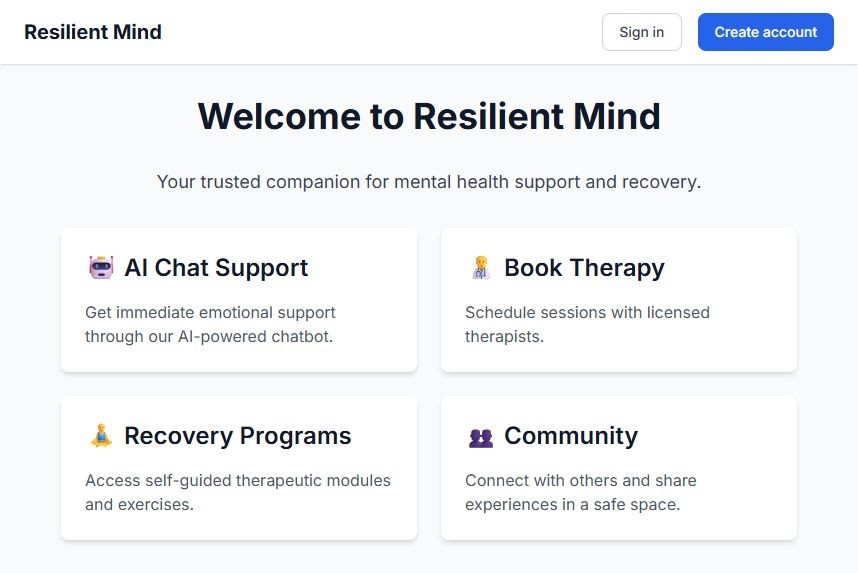
Resilient Mind is a mental health support concept for people affected by the war in Ukraine and for anyone seeking emotional support. The product vision includes an AI chatbot, therapy booking, recovery programs, and a community.
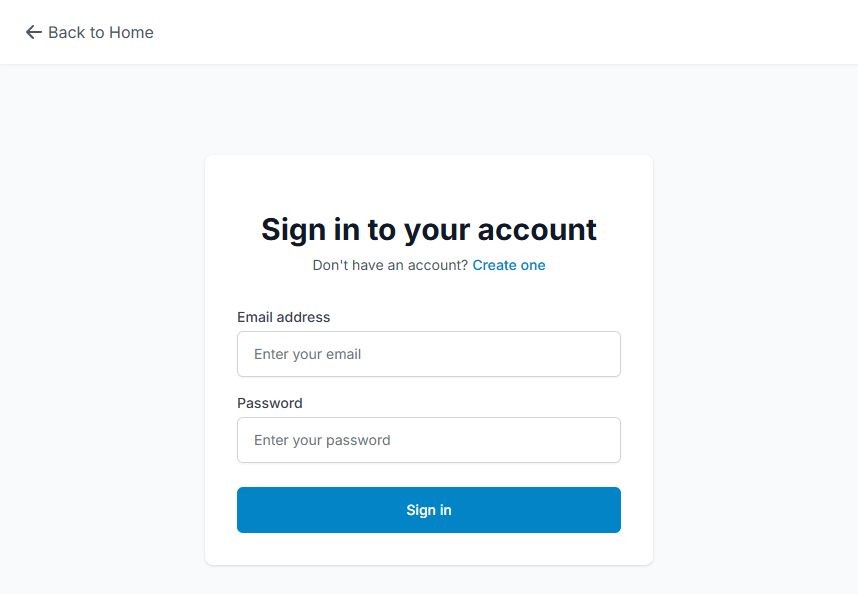
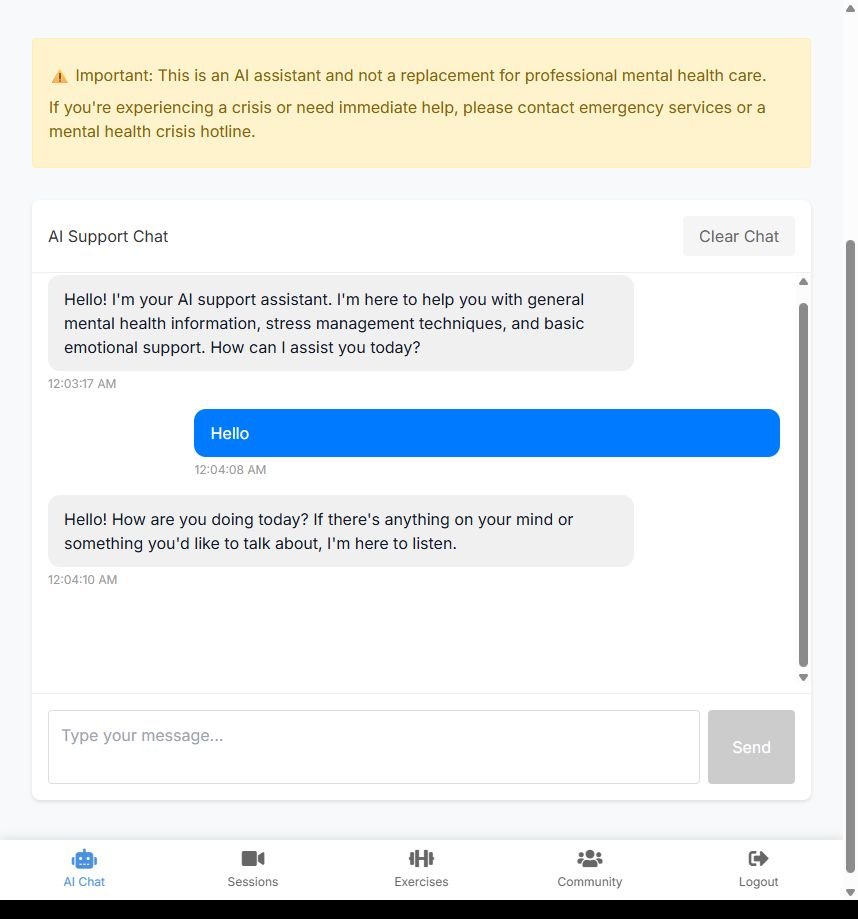
The implemented application provides email and password accounts, an AI-assisted chat for signed-in users, and self-guided breathing and CBT exercises in the browser.
My role
Solo developer across the stack.
I designed and built the Vue 3 and TypeScript application end to end: frontend architecture and routing, Pinia state, Firebase Authentication and Firestore integration, and the callable Cloud Function that connects to OpenAI. Every commit in the repository is mine.
Implemented features
What ships in the prototype.
Authentication
Email and password sign-up and sign-in with Firebase Authentication. Protected routes require a signed-in session.
AI chatbot
OpenAI gpt-4o-mini through the authenticated Cloud Function handleAIChat. The chat is available after sign-in.
Self-guided exercises
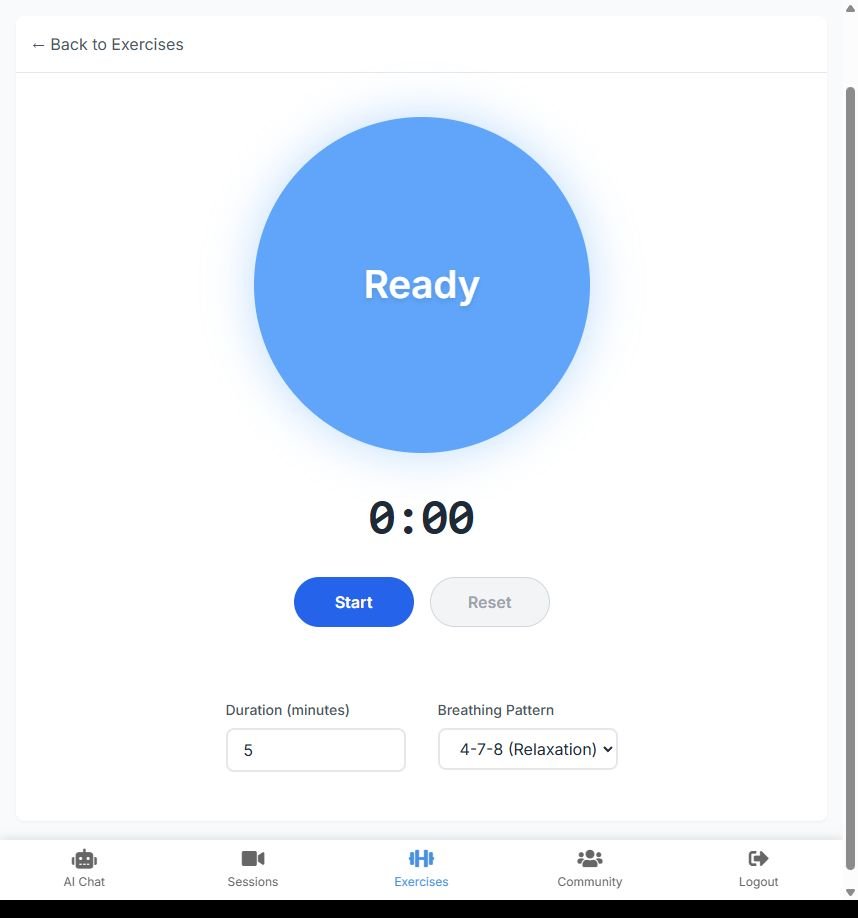
Browser-based breathing patterns and CBT forms (thought record and behavioral activation). Progress is not persisted.
Architecture
From the UI to the OpenAI model.
Vue 3 + Pinia → Firebase Cloud Function (handleAIChat) → OpenAI API (gpt-4o-mini).
handleAIChat runs only for signed-in users through Firebase Authentication. The OpenAI key is stored in a Firebase secret, not in the client bundle. There is no separate application server.
-
01
Vue 3 and TypeScript with Vue Router and Pinia for application structure and state.
-
02
Server-side OpenAI integration through Firebase Cloud Functions.
-
03
GitHub Pages deployment with Vite base
/resilient-mind/and SPA fallback for direct routes.
Project status
Prototype scope.
A working application prototype with authentication, AI-assisted conversations and self-guided exercises. Therapist booking, community features and advanced recovery modules remain unfinished.
Technology stack
What the running application uses.
- Vue 3
- TypeScript
- Vite
- Vue Router
- Pinia
- Tailwind CSS
- Firebase Authentication
- Cloud Firestore
- Firebase Cloud Functions
- OpenAI API
- GPT-4o-mini
- GitHub Actions
- GitHub Pages
Links
Application and source.
-
Live application
saveniukoleh.com/resilient-mind
Landing page, account flows, exercises, and AI chat after sign-in.
-
Repository
github.com/saveniukoleh/resilient-mind
Source for the Vue app, Firebase setup, and deployment workflow.
Interested in working together? Get in touch.